
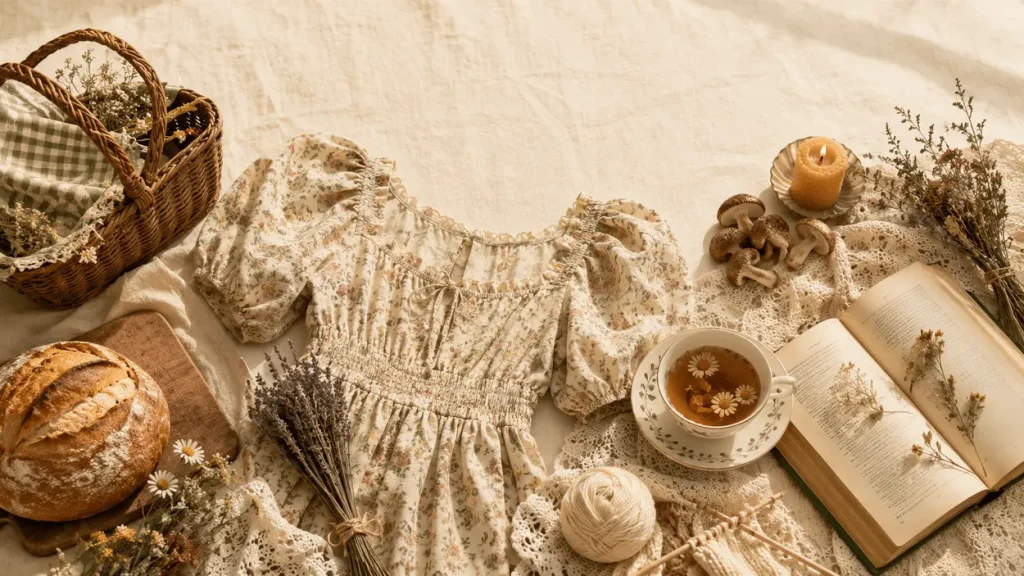
Picture the fantasy. You wake in a stone cottage, pull on a floral dress, and spend the morning baking bread and picking wildflowers while a kettle sings on the stove. Nobody has a deadline. Nobody is online. That fantasy has a name, cottagecore, and at the height of the 2020 lockdowns it was the most comforting corner of the internet, a soft green escape from a world that felt anything but. It is also older and queerer and more complicated than the prairie-dress photos suggest. Here is the whole picture, plus how to actually bring some of it into a life that does not include a cottage.
Cottagecore is an internet aesthetic that romanticizes a simple, self-sufficient rural life: baking, gardening, foraging, prairie dresses, and a slow existence close to nature. It was named on Tumblr around 2018, shaped significantly by sapphic online communities as a gentle safe haven, and surged during the 2020 pandemic as escapism. It sits inside a centuries-old tradition of pastoral fantasy.
Table of Contents
What Cottagecore Actually Is
At its core, cottagecore is a longing made visual. It takes an idealized version of pre-industrial country life, the cottage, the garden, the handmade everything, and turns it into a look and a mood you can perform online or live in small ways offline. The point is not accuracy. It is comfort. Cottagecore is gentle escapism from a fast, loud, capitalist world, dressed in linen and soft light.
It is worth being clear that it is a fantasy, and a deliberately selective one. Cottagecore keeps the bread and the flowers and quietly drops the back-breaking labor, the isolation, and the financial precarity that actual rural life involves. That is not a flaw exactly, every aesthetic is selective, but it is the honest frame to keep in mind.
Where Cottagecore Actually Came From
The word was first used on Tumblr around 2018, but the aesthetic did not arrive out of nowhere, and it did not belong to the mainstream first. Cottagecore was shaped substantially in WLW and lesbian online communities, where the soft, domestic, away-from-the-world fantasy offered something specific: a safe, gentle space free of the male gaze, where intimacy between women and a quiet life together could be imagined without judgment. The “cottagecore lesbian” became a recognized figure for a reason. Like several internet aesthetics, its early shape was carried by a community that the mainstream later borrowed from, and that origin deserves to be named rather than smoothed over.
The trend then broadened. In late 2019 a TikTok creator known as SoraBlu went viral documenting an off-grid herbalist life in a camper, raising chickens and making teas, and the pastoral lifestyle content spread fast. Then the 2020 pandemic hit, everyone was stuck indoors and online, and cottagecore exploded as the perfect antidote: a daydream of fresh air, slow mornings, and self-sufficiency at the exact moment real life offered none of those.
Pull back further and cottagecore is the newest version of a very old impulse. People have built escapist countryside fantasies for over two thousand years, all the way back to the ancient Greek idea of Arcadia, an imagined rural paradise dreamed up by city dwellers who would never actually farm it. Cottagecore is Arcadia with a Tumblr tag.
Key Characteristics of Cottagecore
- A romanticized rural life: cottages, gardens, meadows, woodland, and farm animals.
- Handmade and homemade everything: baking bread, preserves, knitting, embroidery, pressed flowers.
- Foraging and growing your own food, herbs, and flowers.
- Natural materials and soft, nostalgic textures: linen, cotton, wool, wicker, worn wood.
- A slow, analog, anti-hustle pace: letter-writing, reading, long walks, tea.
- Whimsy from nature: mushrooms, frogs, bees, wildflowers, and a general softness.
Cottagecore Fashion
Cottagecore fashion is built for a life of gardening and bread-baking, even if you do neither. The silhouette is soft, modest, and comfortable, made from natural fibers in floral and earthy tones. Anyone can wear it, though the most recognizable pieces lean feminine and vintage.
- The staples: flowy prairie and milkmaid dresses, puff sleeves, pinafores and aprons, smocking, and high necklines.
- Fabrics and prints: linen, cotton, and wool in ditsy florals, gingham, and gentle earth tones.
- Layers and knits: hand-knitted cardigans, crochet, shawls, and chunky socks.
- Finishing touches: straw hats, woven baskets, Mary Jane shoes or simple boots, and a fresh-faced, barely-there makeup look.
The soft, floral, feminine end of cottagecore overlaps heavily with the coquette aesthetic, though coquette leans more ribbons-and-romance while cottagecore leans more garden-and-bread.
Cottagecore Color Palette
Cottagecore colors are pulled straight from a garden at golden hour: soft, warm, and natural, never neon.
| Color | Hex | Where to use it |
|---|---|---|
| Sage green | #A3B18A | The signature cottagecore green, for knits and walls |
| Cream | #FAF3E0 | Base tone for dresses, linen, and backgrounds |
| Butter yellow | #F3E5AB | Soft warmth, florals and accents |
| Dusty rose | #D4A5A5 | Gentle pink for floral prints and details |
| Terracotta | #C56B47 | Earthy warmth, pottery and autumn tones |
| Warm brown | #8B6F47 | Wood, wicker, and grounding neutrals |
Cottagecore Books, Movies, and Music
Books: Anne of Green Gables, Little Women, The Secret Garden, the gentle world of Beatrix Potter, and the Shire chapters of Tolkien. Anything pastoral, cozy, and a little old-fashioned.
Films: the entire Studio Ghibli catalogue, especially My Neighbor Totoro, Kiki’s Delivery Service, and Howl’s Moving Castle, plus the 2005 Pride and Prejudice and the 2019 Little Women.
Music: Taylor Swift’s folklore and evermore, released in 2020, are the definitive cottagecore albums and arguably the moment the aesthetic peaked culturally. Around them sit Hozier, Fleetwood Mac, Sufjan Stevens, and soft acoustic folk in general.
Cottagecore vs the Other -cores
Cottagecore spawned and sits beside a whole family of nature aesthetics, and they get mixed up constantly. Here is the clean version.
| Aesthetic | Core idea | How it differs from cottagecore |
| Cottagecore | Romanticized simple cottage and rural life, baking, gardening, prairie dresses | The tidy, pretty, domestic umbrella of the group |
| Goblincore | Celebrates the overlooked and earthy: mushrooms, frogs, moss, mud, shiny found objects | Embraces grime and oddness; cottagecore stays clean and pretty |
| Fairycore | Whimsical and magical: fairies, glitter, pastels, an ethereal dreamlike mood | More fantasy and magic; cottagecore is grounded and domestic |
| Farmcore / Countrycore | The working farm: animals, crops, actual agriculture | More literal labor; cottagecore is the romanticized version of it |
| Grandmacore / Coastal grandmother | Cozy elder-domestic nostalgia: knitting, baking, linen, often seaside | Overlaps heavily; coastal grandmother is breezier and less rural |
| Dark academia | Romanticized scholarly life: libraries, tweed, autumn, old books | Intellectual and moody versus pastoral and natural, the two are cousins |
Cottagecore’s closest relative on that list is dark academia, the other great escapist, literary, nostalgia-driven aesthetic.
How to Embrace the Cottagecore Lifestyle (Without a Cottage)
You do not need to move to the countryside or own a single prairie dress. Cottagecore is mostly a way of slowing down and paying attention, which you can do from a city flat.
- Bake something from scratch, even just once a week. Bread is the cottagecore default, but anything counts.
- Grow something. A windowsill herb pot or a few houseplants is enough to start.
- Go analog for an hour: read a real book, write a letter, take a walk with no phone.
- Make something by hand, knitting, embroidery, pressing flowers, or a simple craft.
- Eat outside, take a picnic, or just have tea by a window in good light.
At its heart this is one way to romanticize your life, paying loving attention to small ordinary moments instead of rushing past them. Cottagecore just gives that instinct a garden and a loaf of bread.
Cottagecore Room Decor
A cottagecore room feels warm, lived-in, and a little bit grandmother’s-house, in the best way.
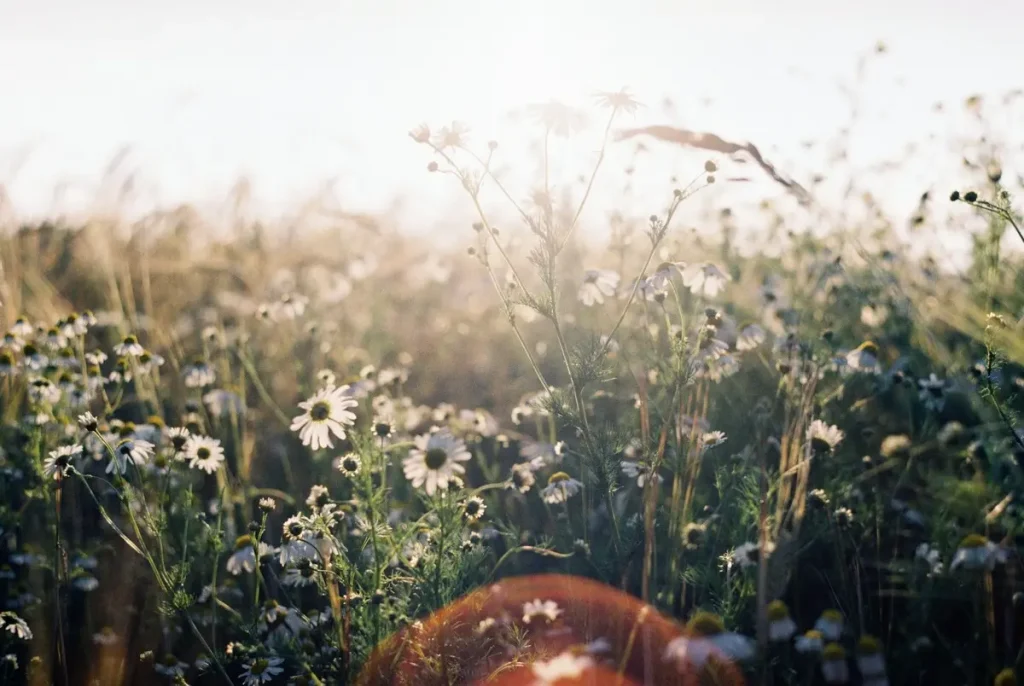
- Dried flowers, fresh herbs, and bunches of wildflowers in mismatched jars.
- Natural and vintage materials: worn wood furniture, wicker baskets, ceramic and clay.
- Floral or gingham prints on bedding, curtains, and cushions.
- Warm, soft lighting from lamps and candles rather than harsh overhead light.
- Open shelving with mason jars, old books, plants, and little found treasures.
- Plenty of greenery, the more houseplants the better.
The Honest Part: A Beautiful Fantasy
Cottagecore is lovely and genuinely good for you in small doses, slowing down, making things, getting outside. It is worth holding one honest thought alongside it though. The cottage fantasy quietly edits out the parts of rural life that were hard: the relentless physical labor, the isolation, the lack of money, and the fact that the idyllic European countryside it usually pictures has its own complicated history of who owned the land and who worked it. None of that means you cannot enjoy the aesthetic. It just means the version online is a daydream, not a documentary, and it is healthier to enjoy it as one.
Is Cottagecore Still Popular in 2026?
Cottagecore is past its viral peak but more durable than the trends that spiked alongside it. The frenzy of 2020 has settled into a stable, evergreen aesthetic that lives quietly on Pinterest and in a steady stream of prairie dresses and bread-baking videos. It also seeded a whole family of offshoots, goblincore, fairycore, and the coastal grandmother and tomato girl moments of recent summers, which is usually the sign of an aesthetic that mattered. It is no longer the loudest thing on the internet, but unlike a passing trend, cottagecore is not going anywhere, because the thing underneath it, wanting a slower and softer life, never really goes out of style.
Cottagecore FAQs
What is the cottagecore aesthetic?
Cottagecore is an internet aesthetic that romanticizes a simple, self-sufficient rural life: baking, gardening, foraging, prairie dresses, and a slow existence close to nature. It works as gentle escapism from a fast, modern world, and it is as much a mood and a lifestyle as a look.
Where did cottagecore come from?
The term was named on Tumblr around 2018 and was shaped significantly by WLW and sapphic online communities as a safe, gentle fantasy space. It spread through TikTok in 2019 and exploded during the 2020 pandemic. The deeper impulse, an escapist countryside paradise, goes back over two thousand years to the ancient Greek idea of Arcadia.
What do you wear for cottagecore?
Flowy prairie and milkmaid dresses, puff sleeves, pinafores and aprons, hand-knitted cardigans, and floral or gingham prints in natural fibers like linen and cotton. Finish with straw hats, woven baskets, Mary Janes, and a soft, fresh-faced makeup look. Anyone can wear it, though the signature pieces lean vintage and feminine.
What is the difference between cottagecore and goblincore?
Cottagecore is the tidy, pretty version of nature love: clean cottages, baking, florals. Goblincore celebrates the overlooked and earthy instead, mushrooms, frogs, moss, mud, and shiny found objects. Cottagecore stays pristine; goblincore embraces the grime.
Is cottagecore still popular in 2026?
Yes, though it is past its 2020 viral peak. It has settled into a stable, evergreen aesthetic that thrives on Pinterest and spawned offshoots like goblincore, fairycore, and coastal grandmother. The look is less of a frenzy now and more of a permanent fixture, because the desire for a slower life behind it never fades.
How do I start a cottagecore lifestyle without a cottage?
You do not need the countryside. Bake something from scratch, grow herbs on a windowsill, go phone-free for an hour with a real book, make something by hand, and have tea outside or by a window. Cottagecore is mostly about slowing down and noticing small things, which works anywhere.

